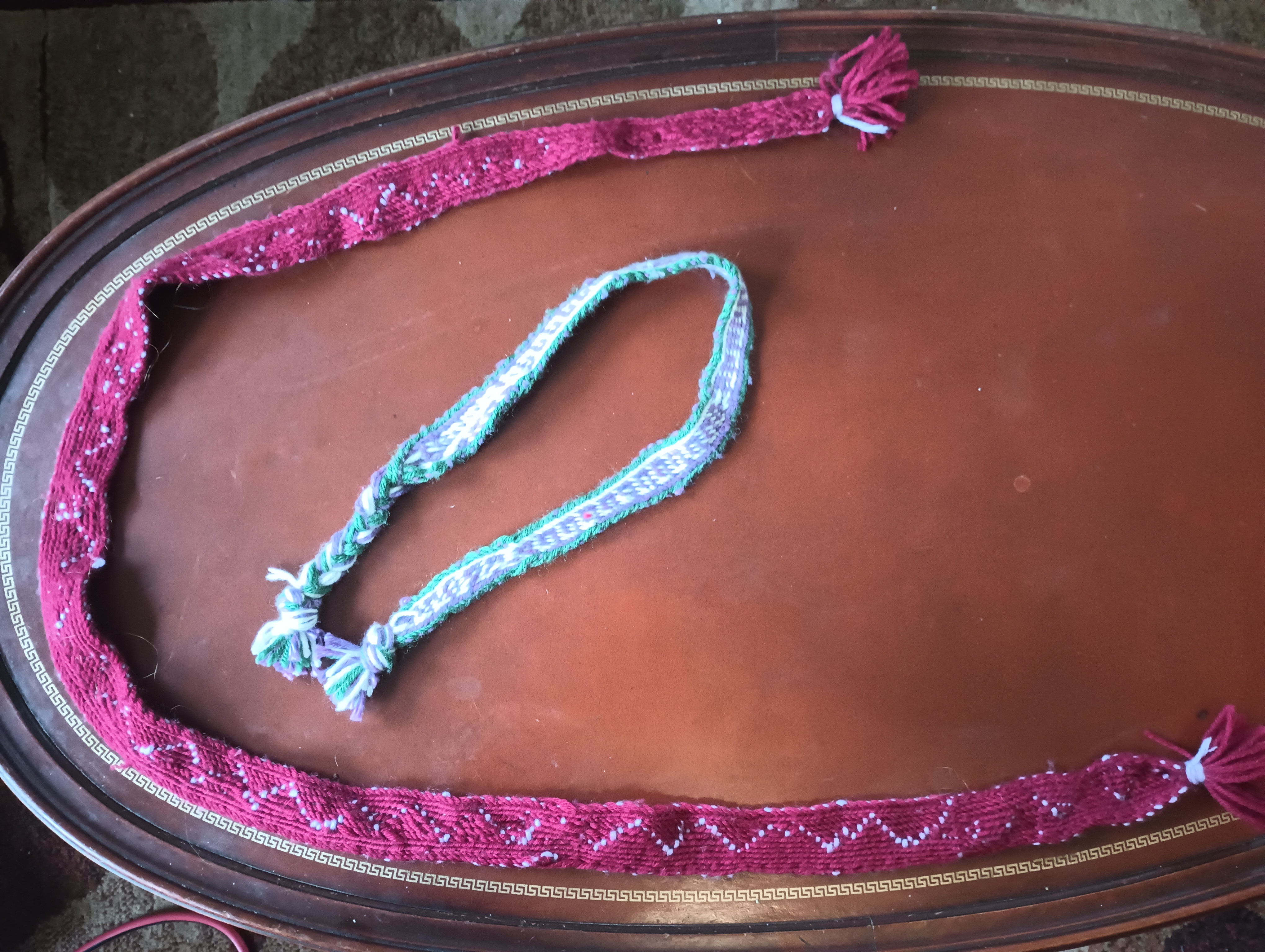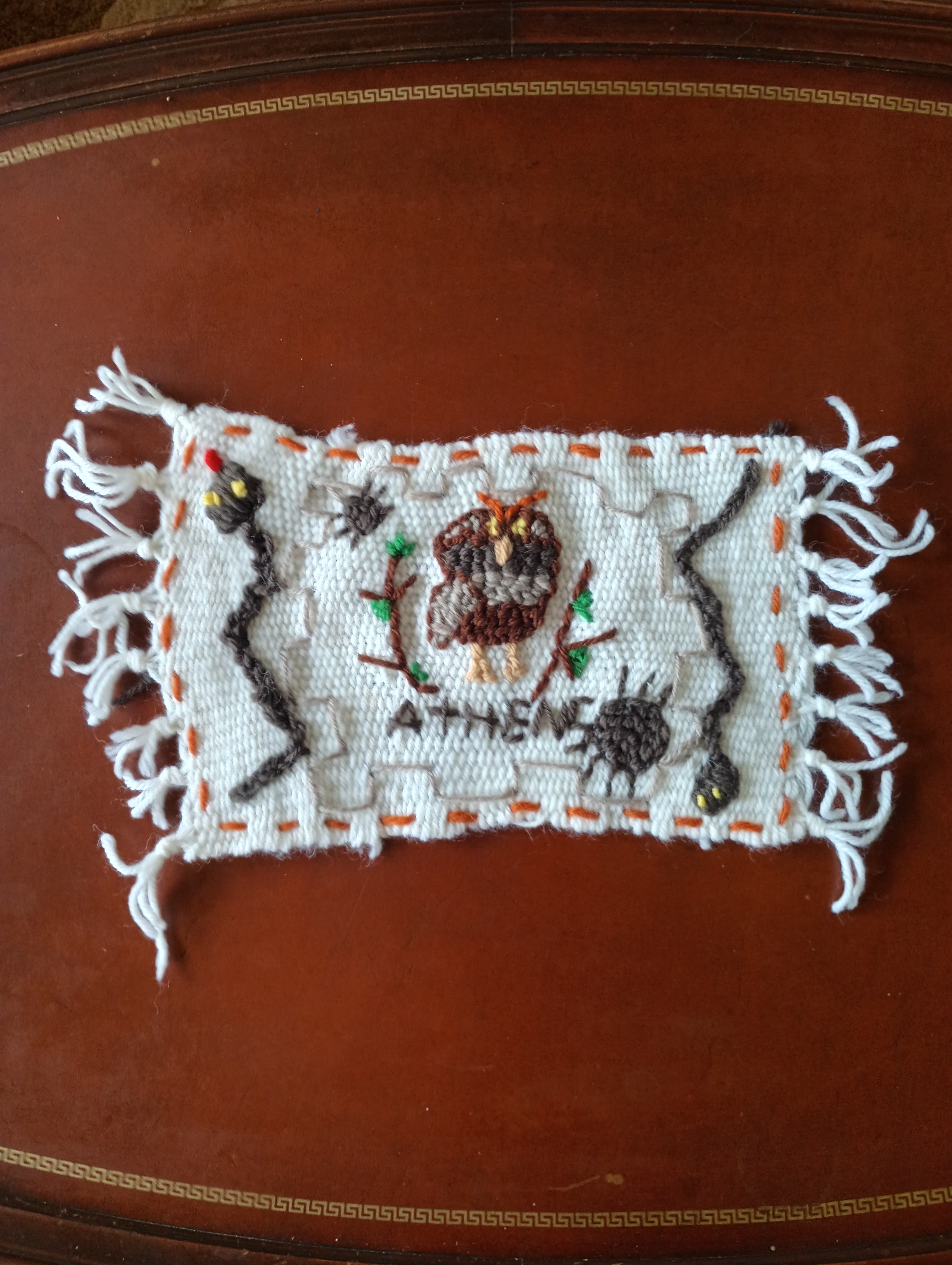
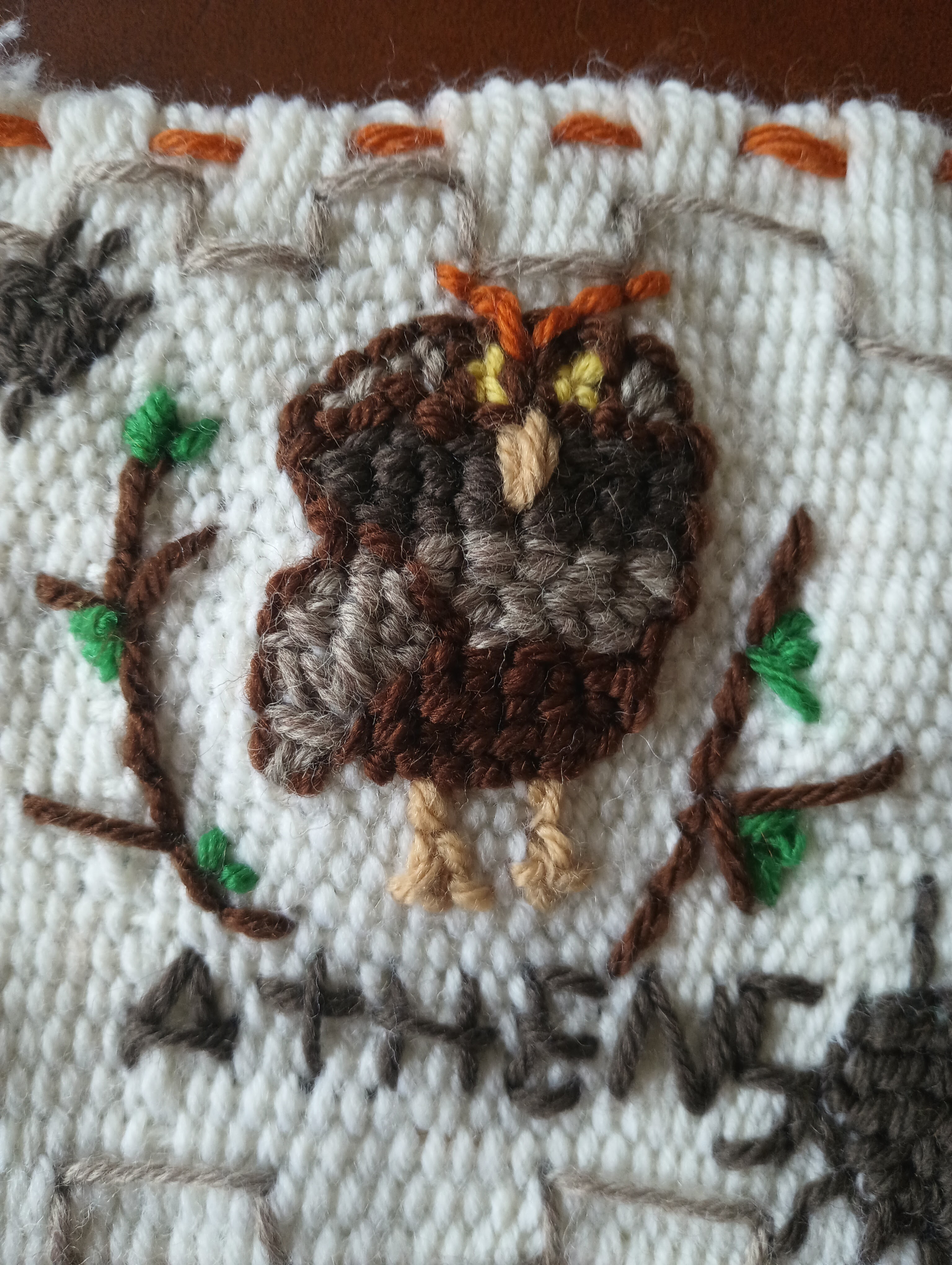
"symbols played a very crucial role in performing religious purposes in a setting like the Panathenaia"
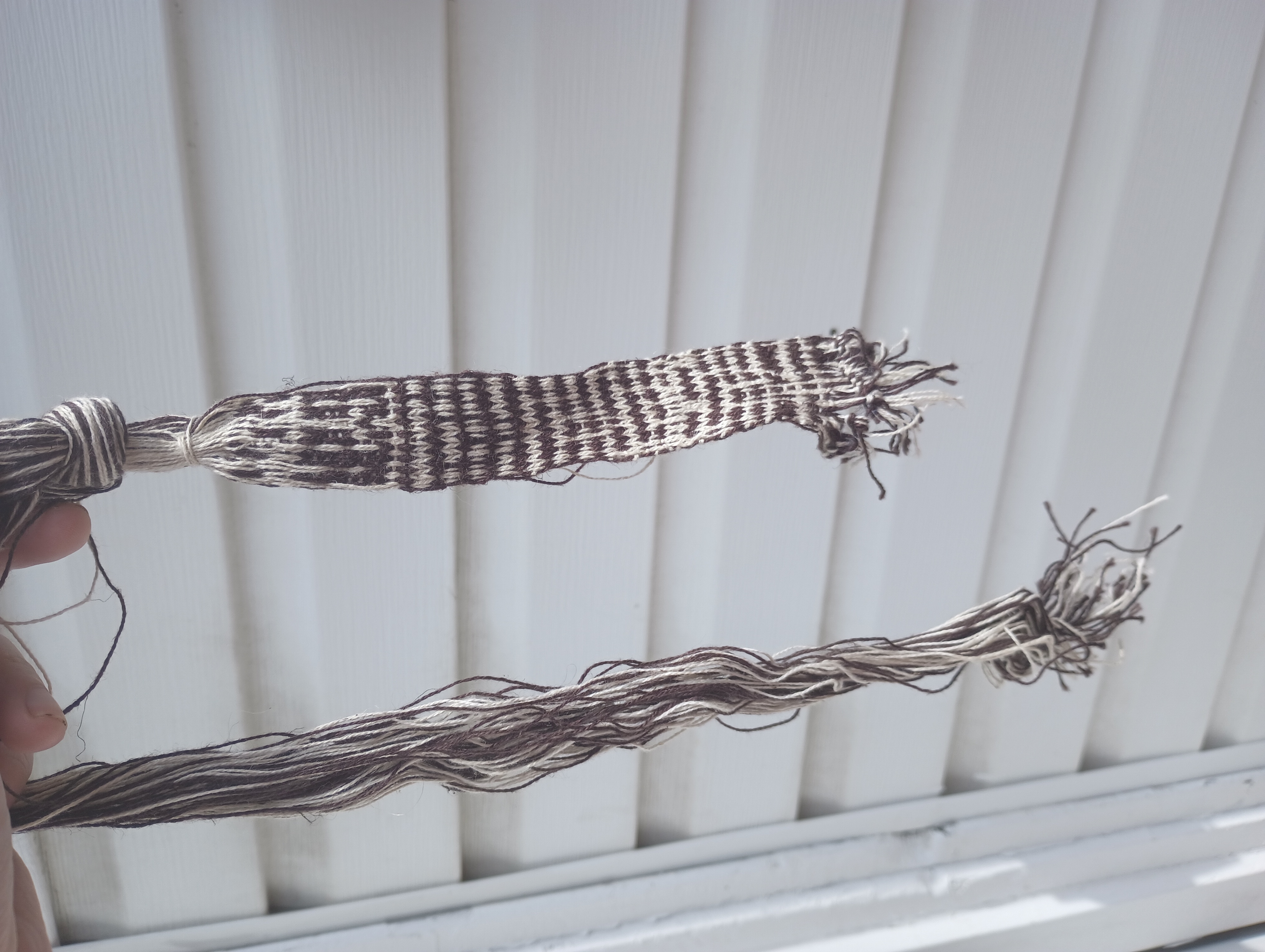
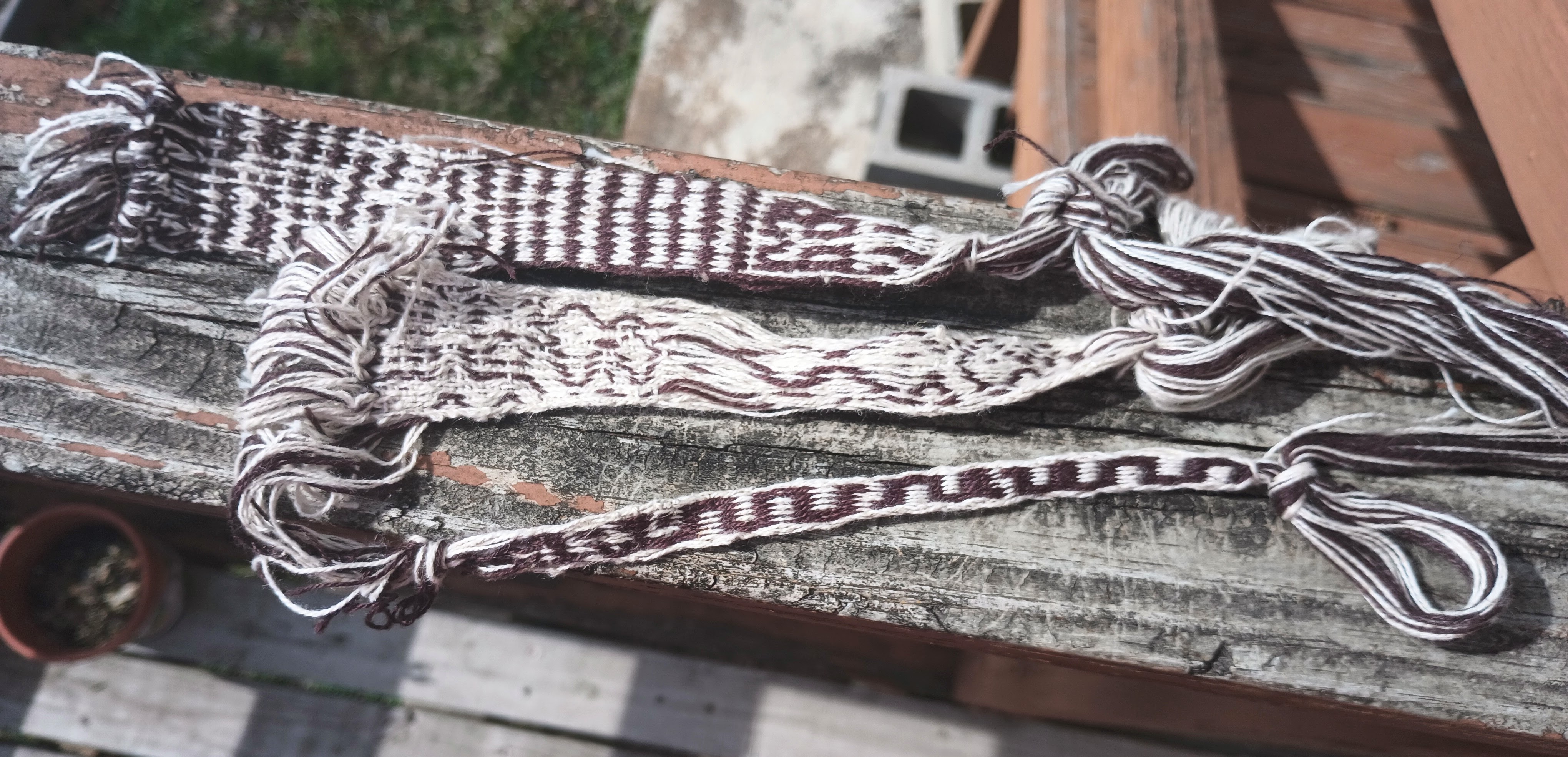
"This project investigates the translatability of geometric decorative motifs found on Classical Mediterranean pottery into the medium of tablet weaving... This project aims to experimentally explore how these patterns can be recreated through tablet weaving techniques."
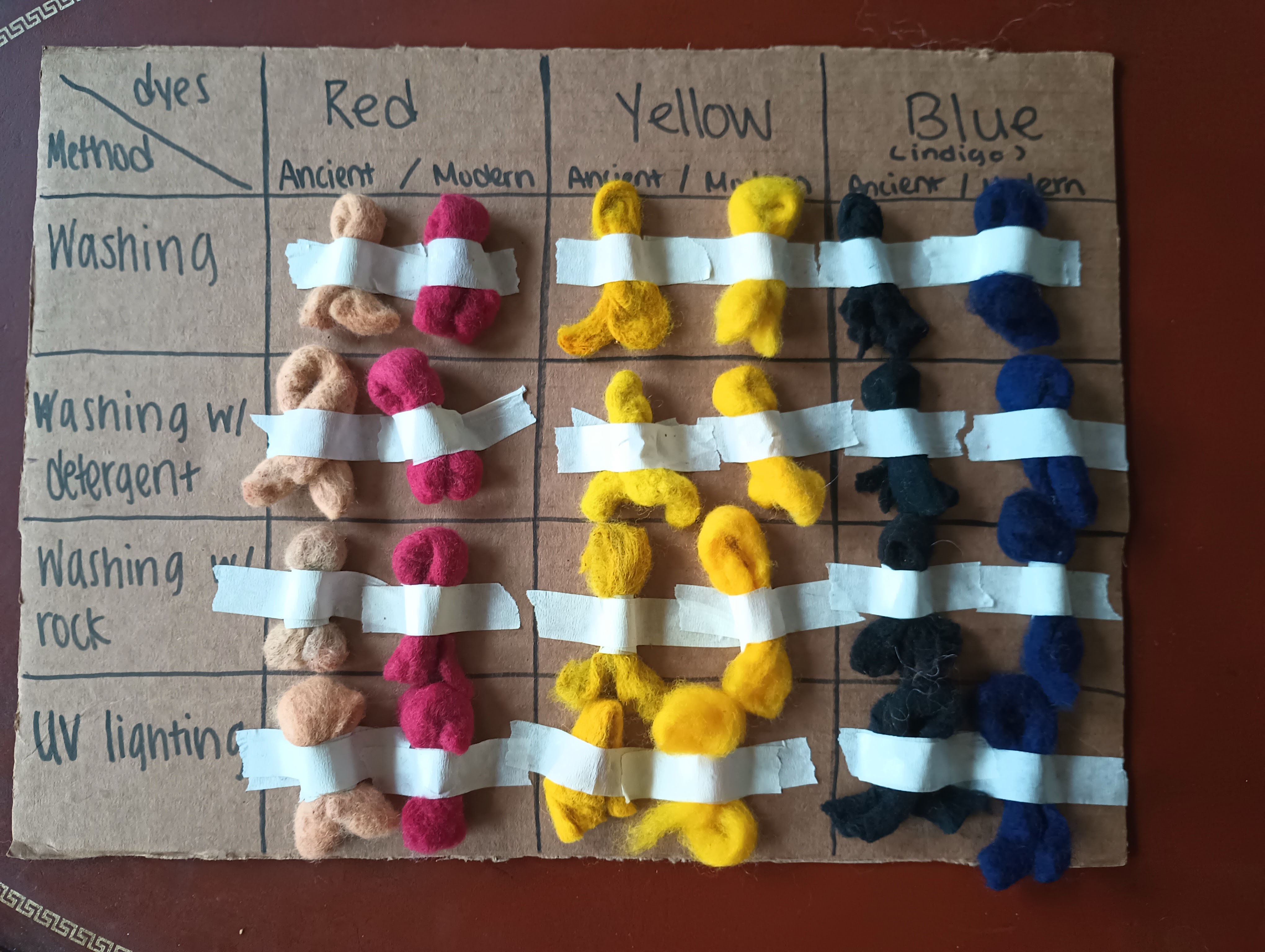
"I will provide analysis on the colorfastness of each dyeing method by applying different treatments to the fabrics."
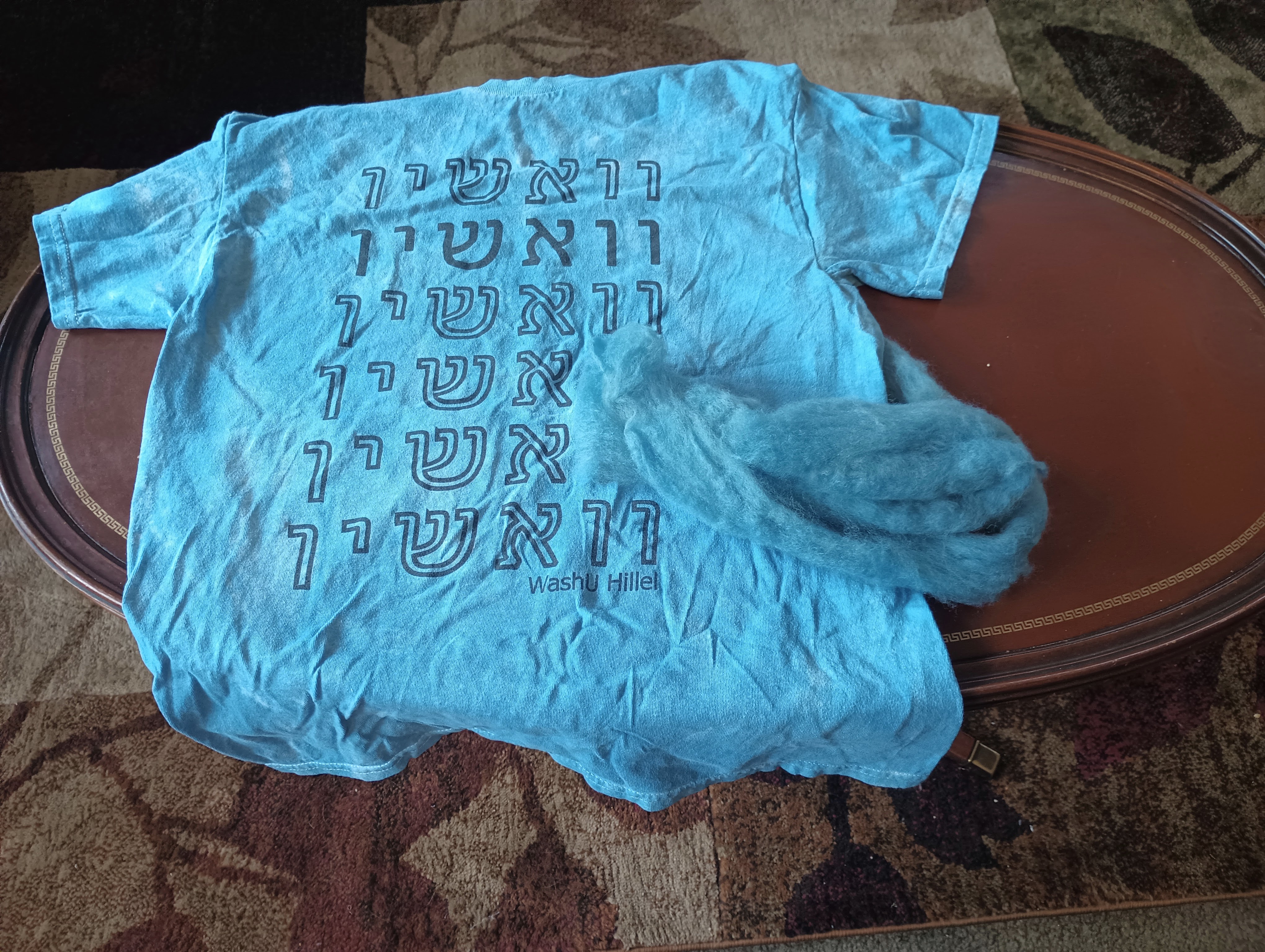
"blue dyes were extremely important in mediterranean societies."
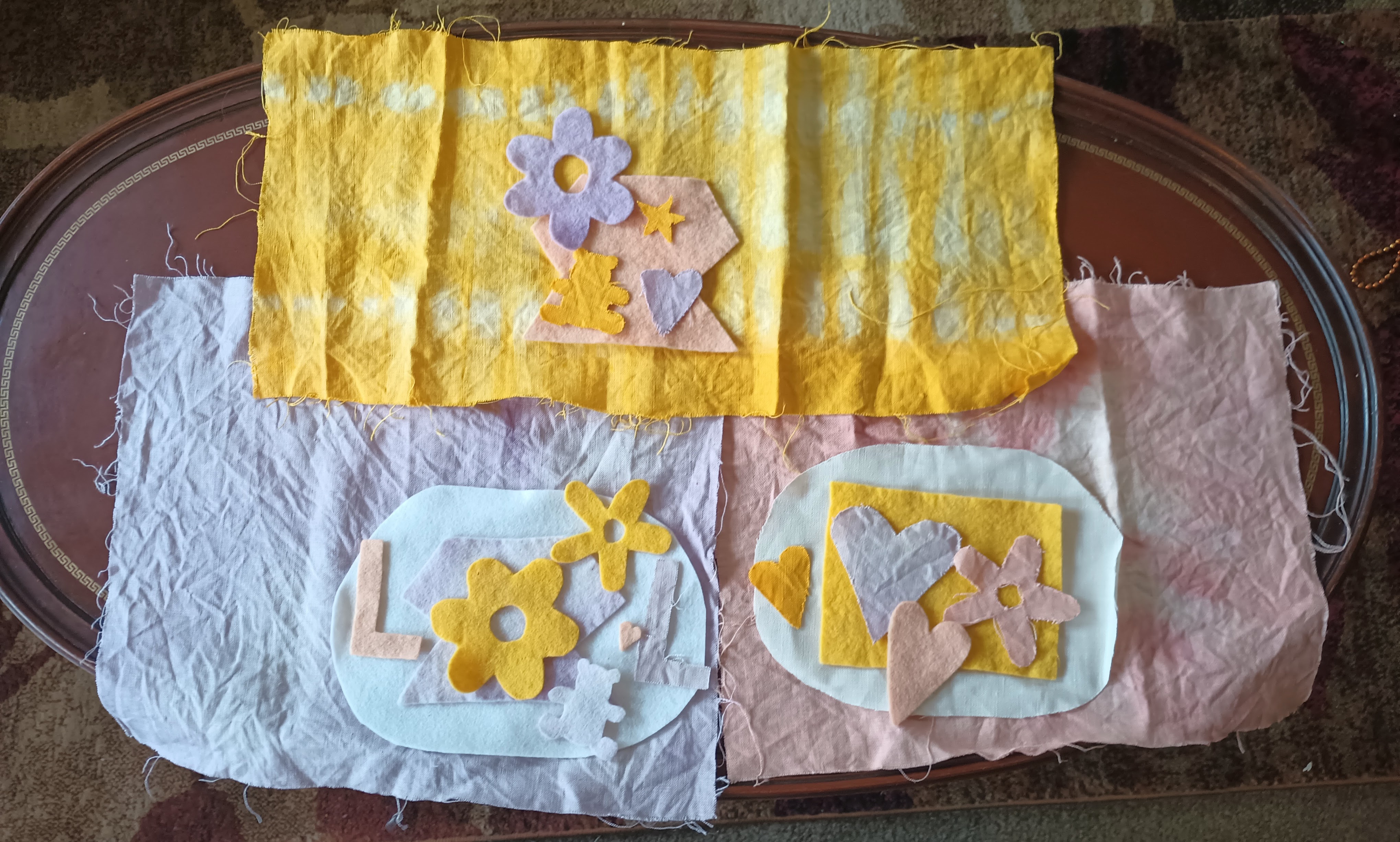
"I chose saffron, madder root, and logwood for this project because each of these colors holds strong cultural and symbolic meaning in the ancient Mediterranean world."
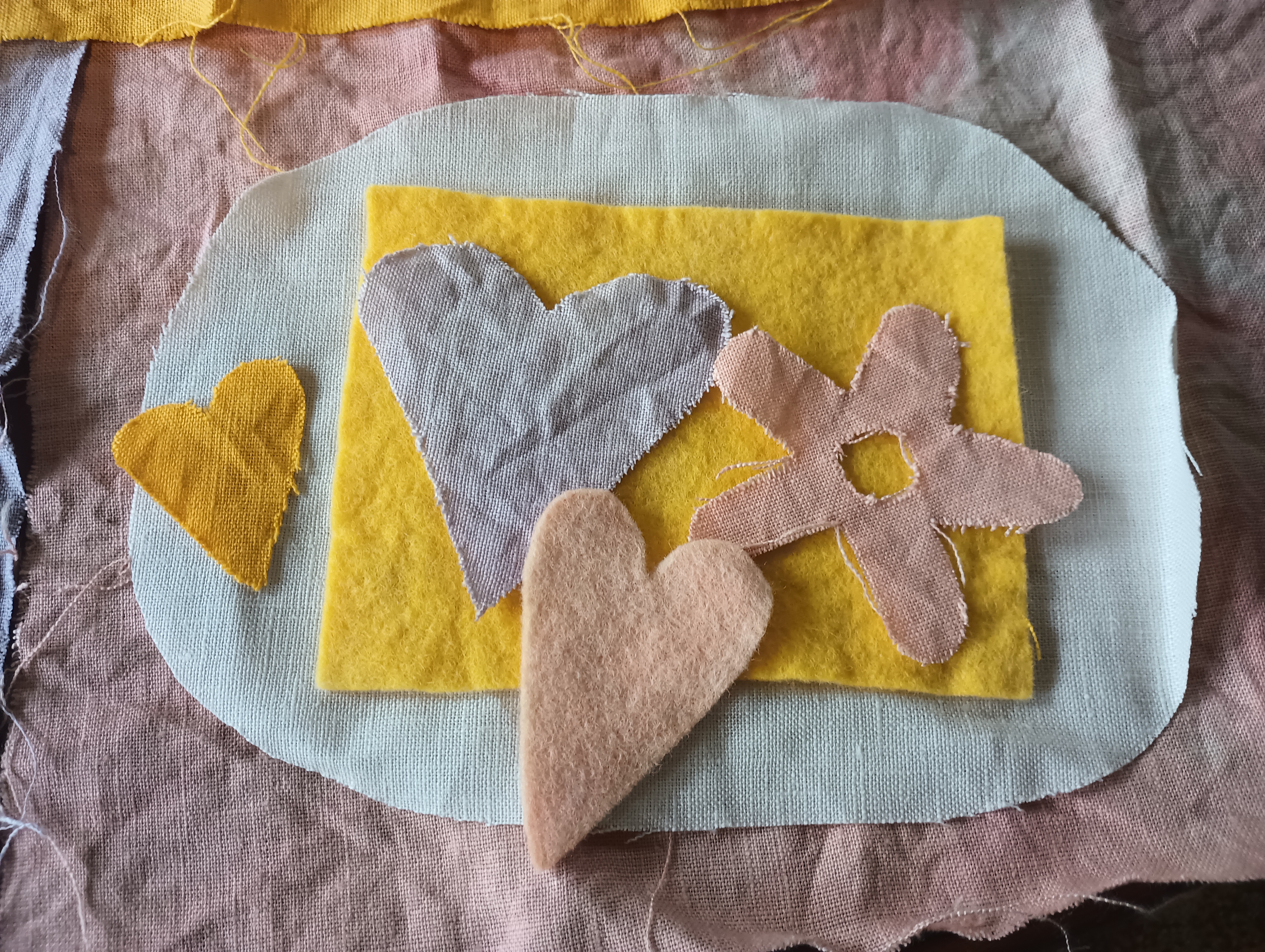
"These shapes blend ancient practices with modern expressions of care, creativity, and personal meaning."
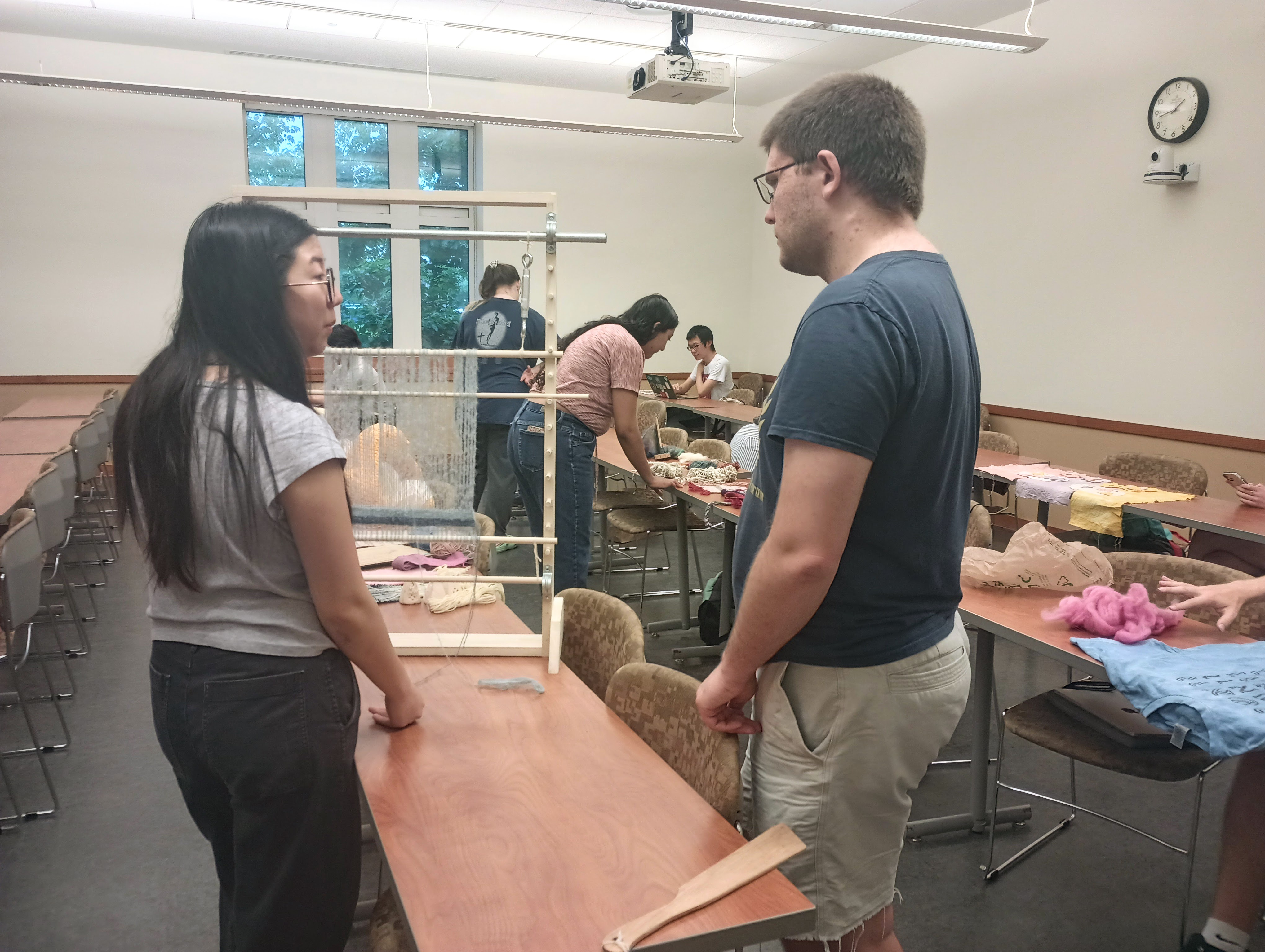
"The experience of wefting downwards greatly differs from wefting upwards - in downwards-wefting vertical two-beam weaving, the warp threads are tied to beams on the top and bottom of the loom. Wefting downwards also allows for the weaver to sit for much of the work, standing upon progression of the height of the textile."
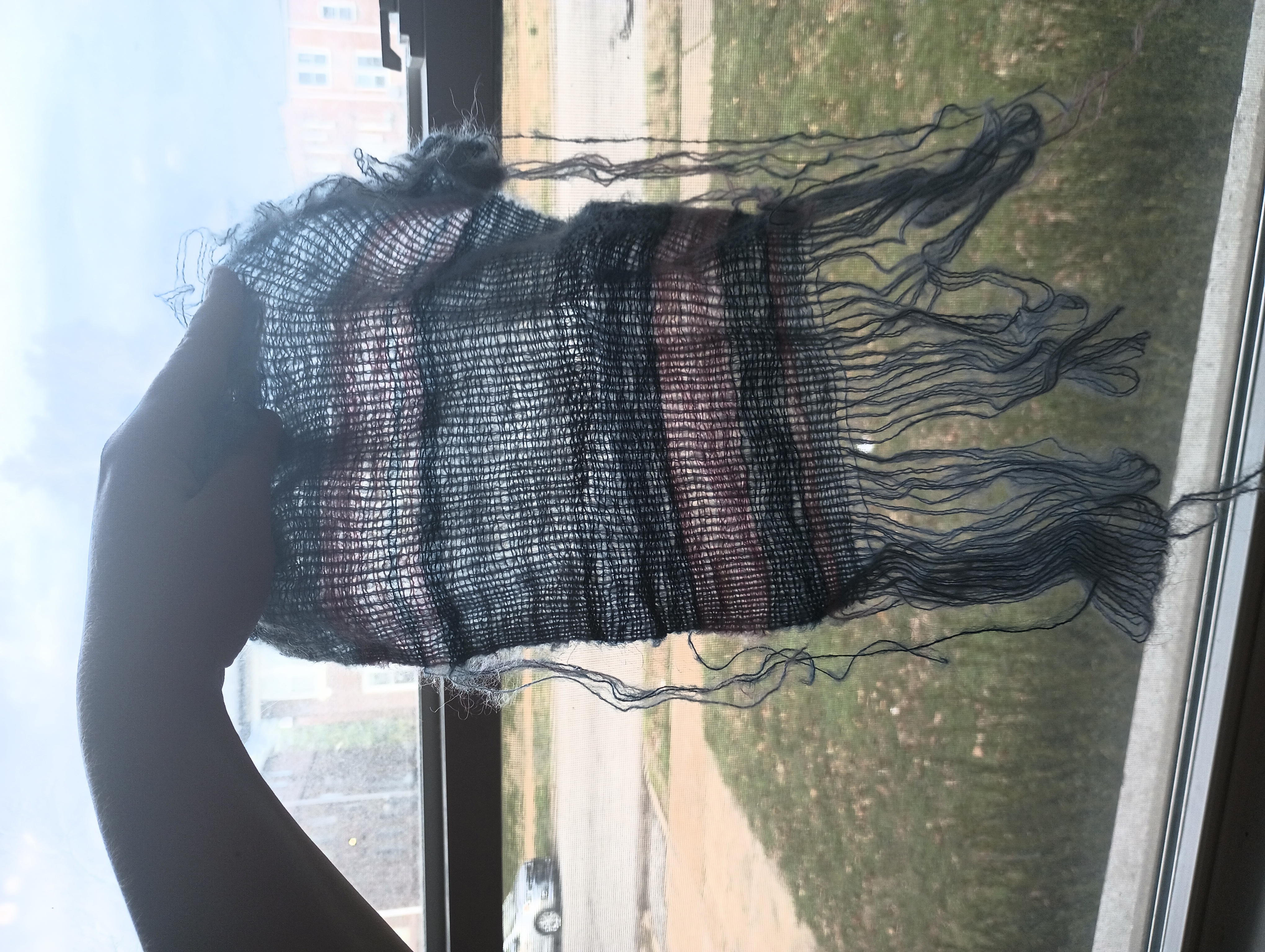
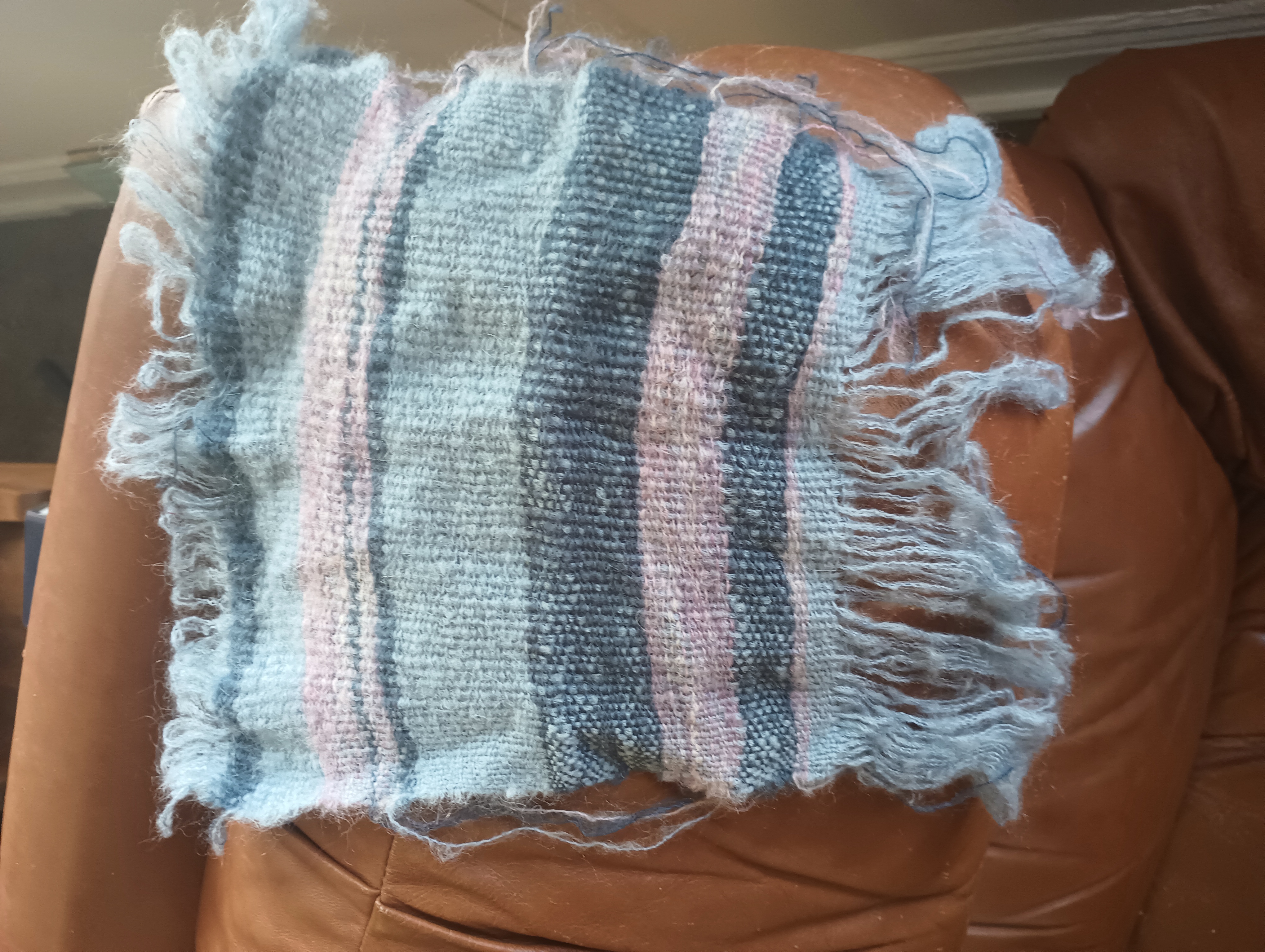
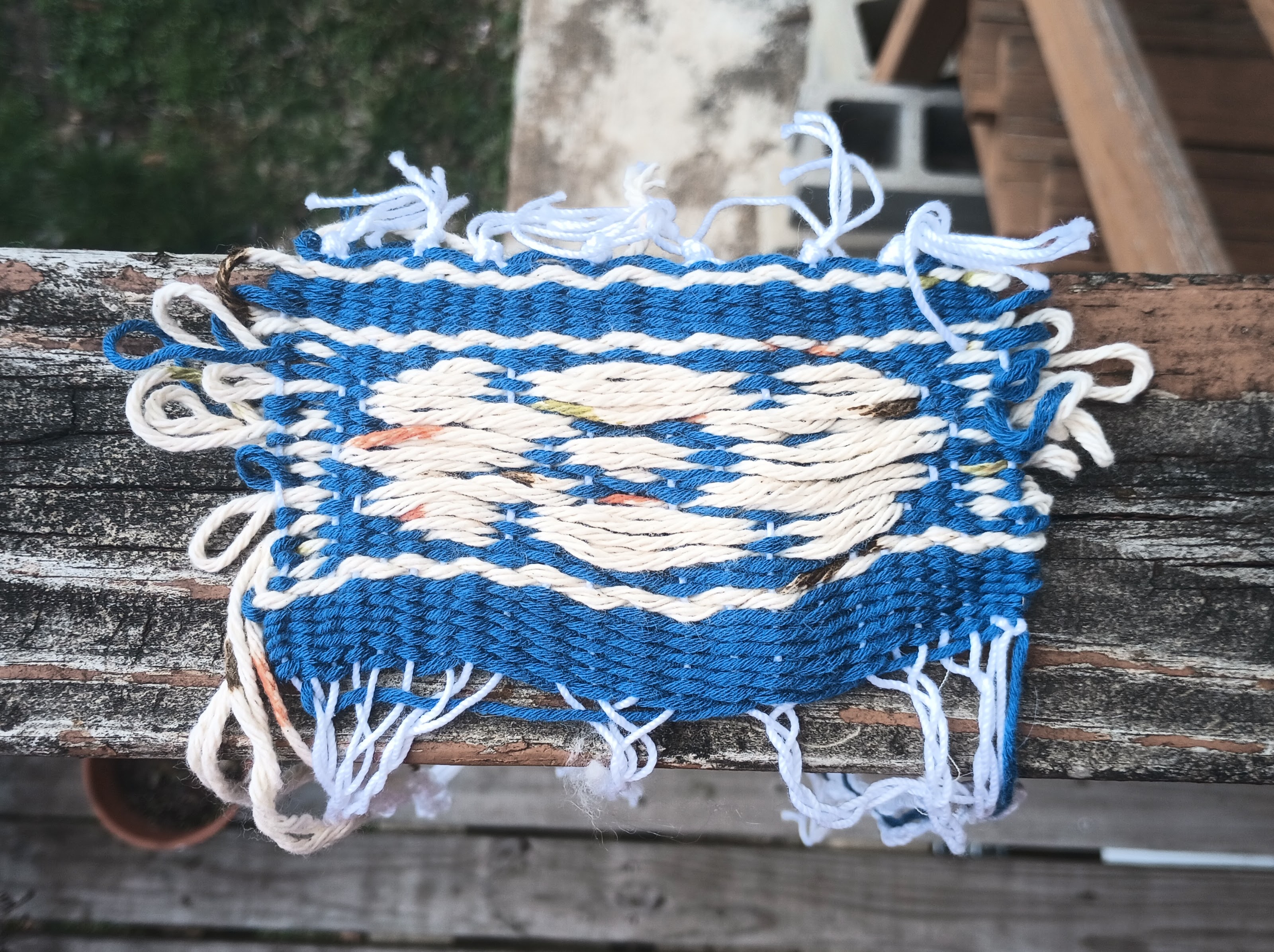
"This project helped me to gain a much better understanding of what Ancient Greeks had to go through to create patterns within their weaves. I was not expecting it to take as much mental stress and energy as this required, and I have a new respect for the children and women who have dedicated their lives to this kind of craft."
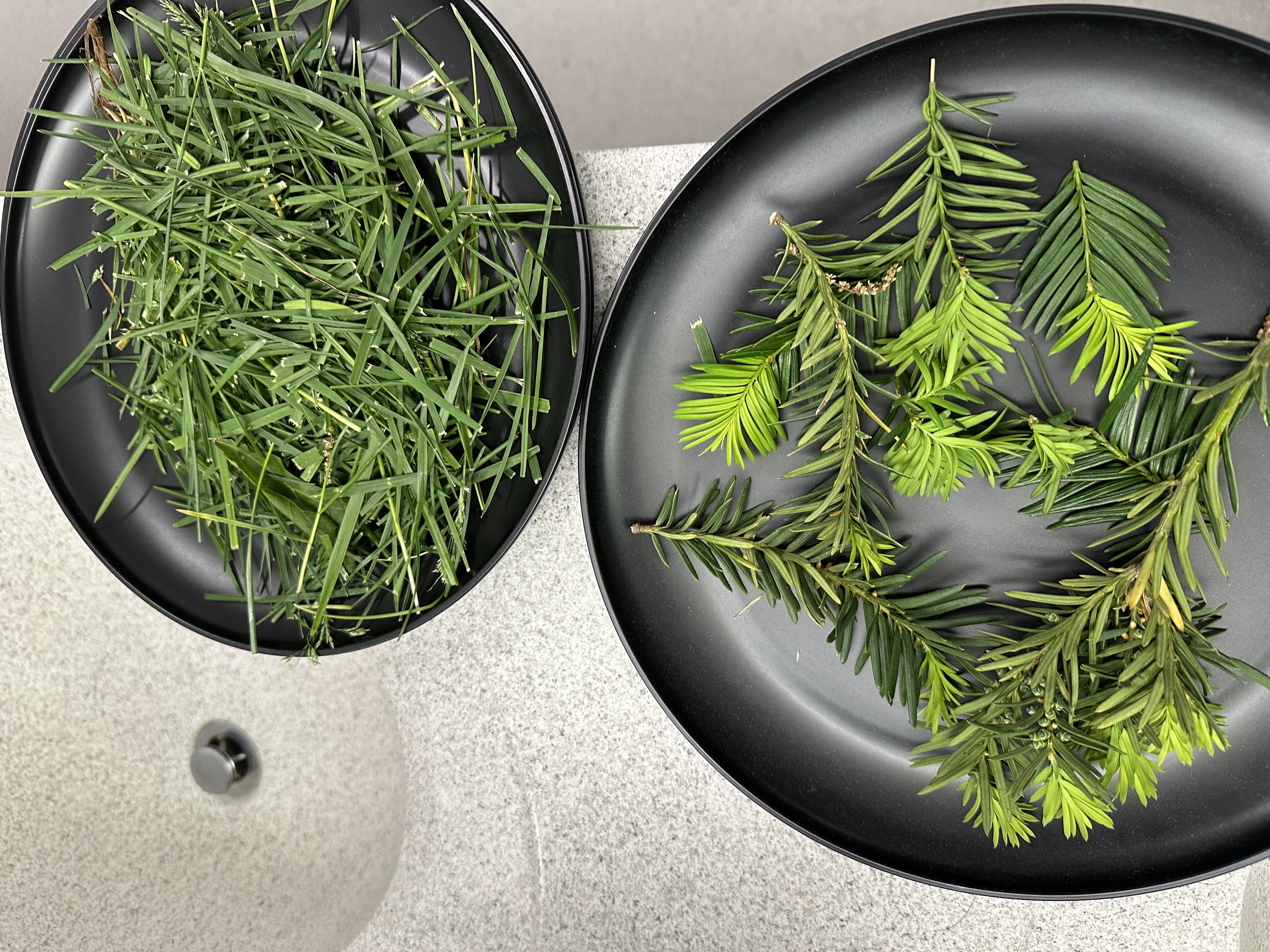
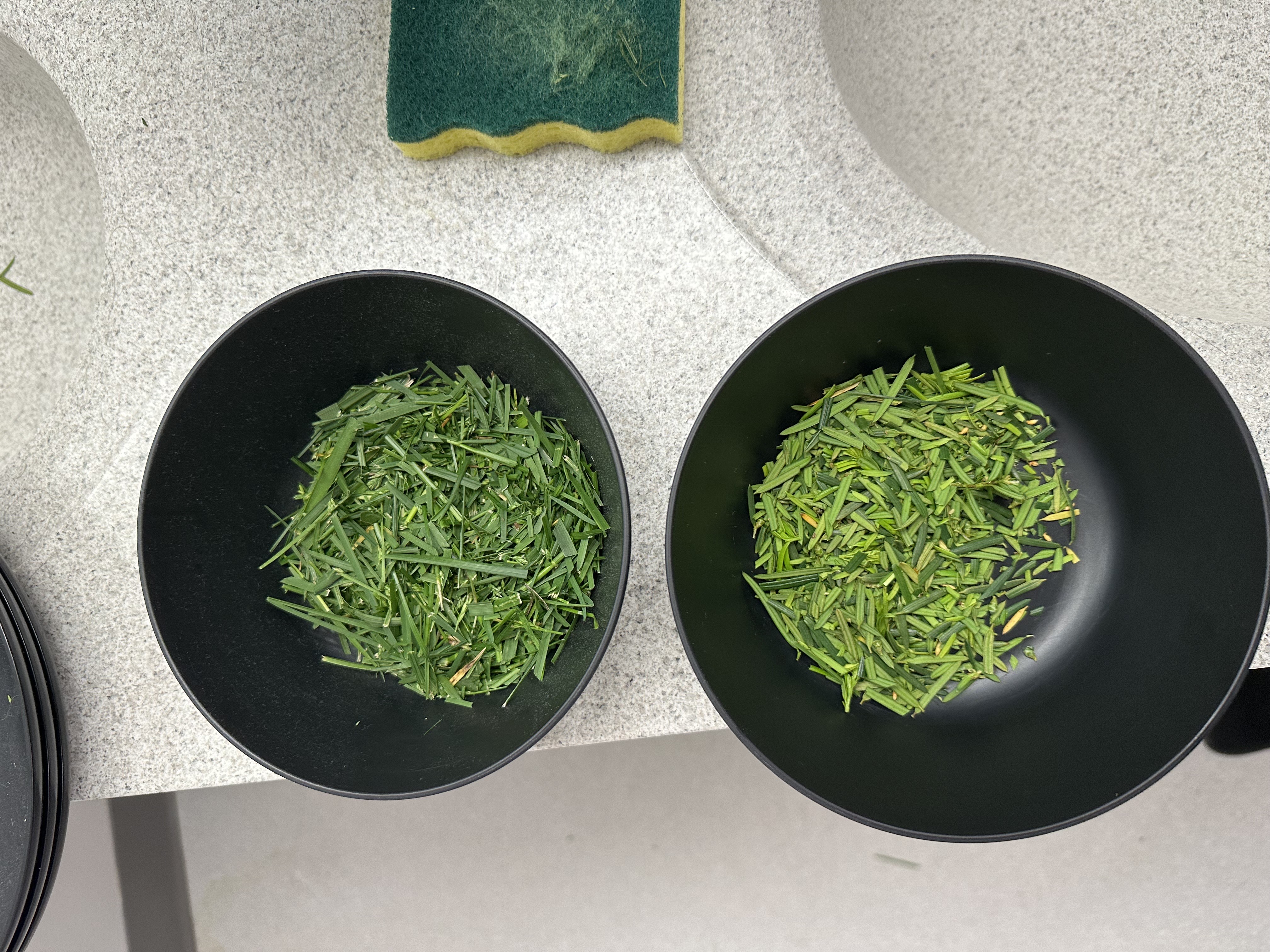
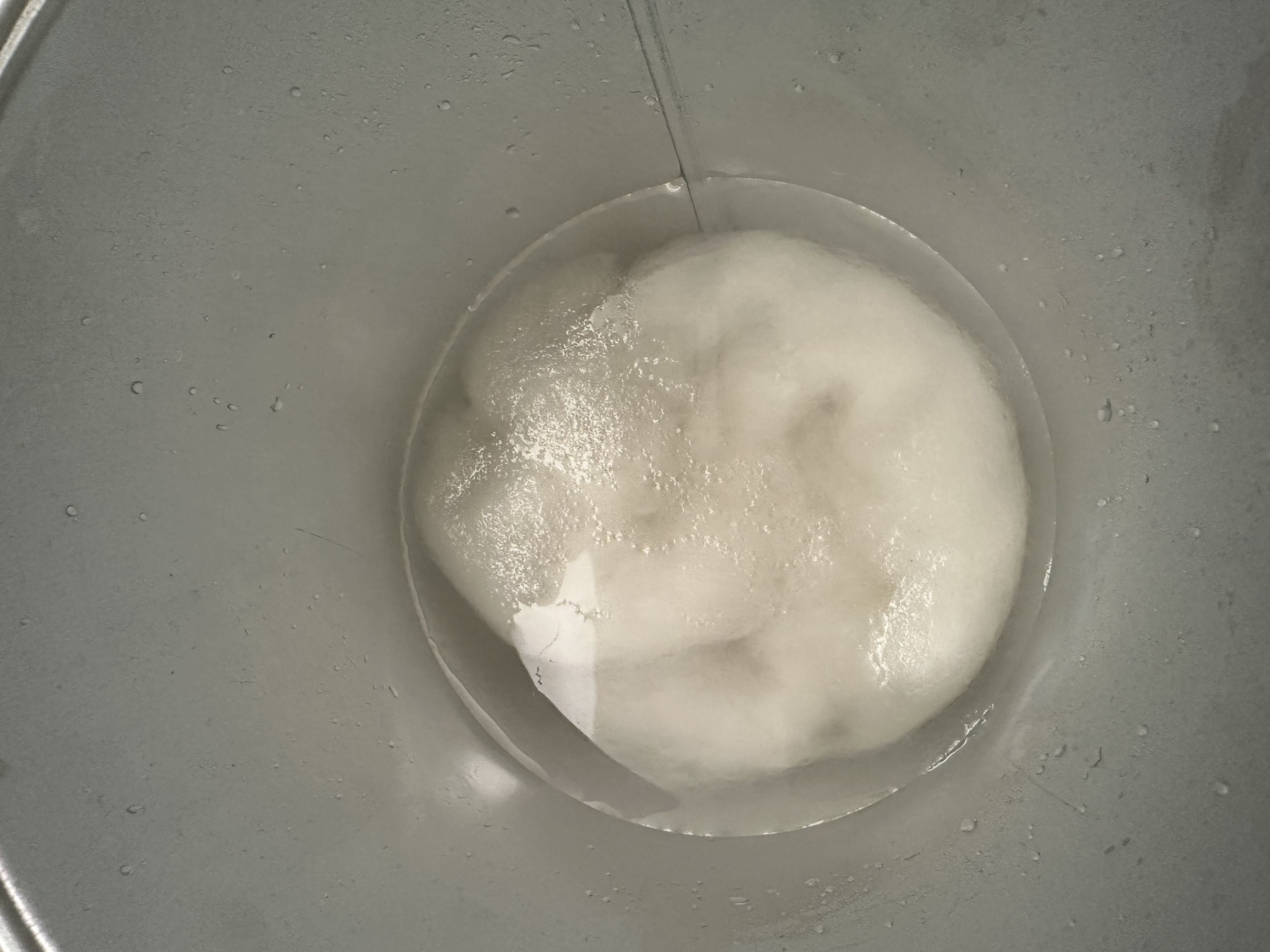
"I attempted a modern version of ancient dye discovery."
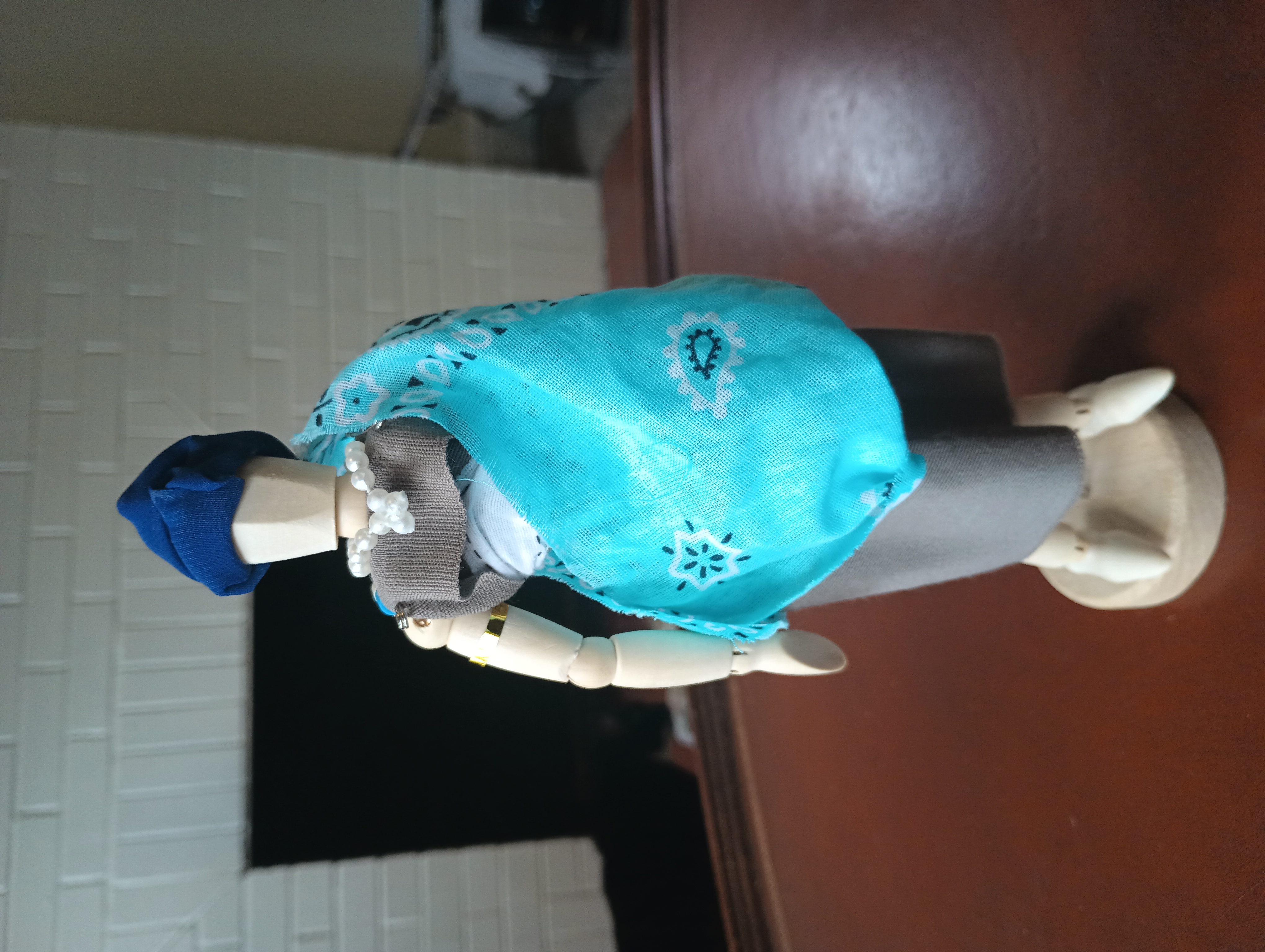
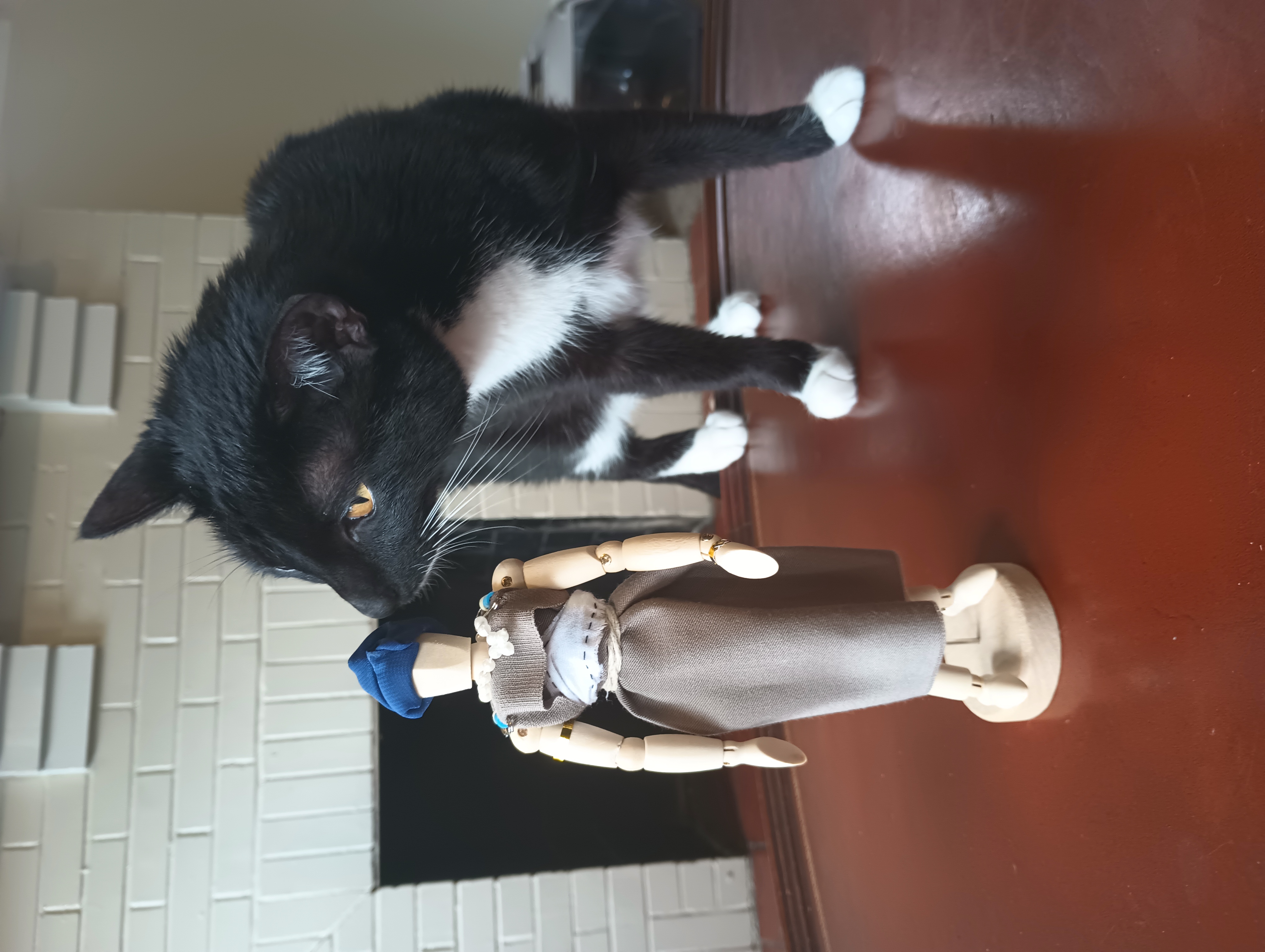
"The process of creating these miniature garments helped me understand the deeper meaning and care behind every layer of ancient Greek clothing."
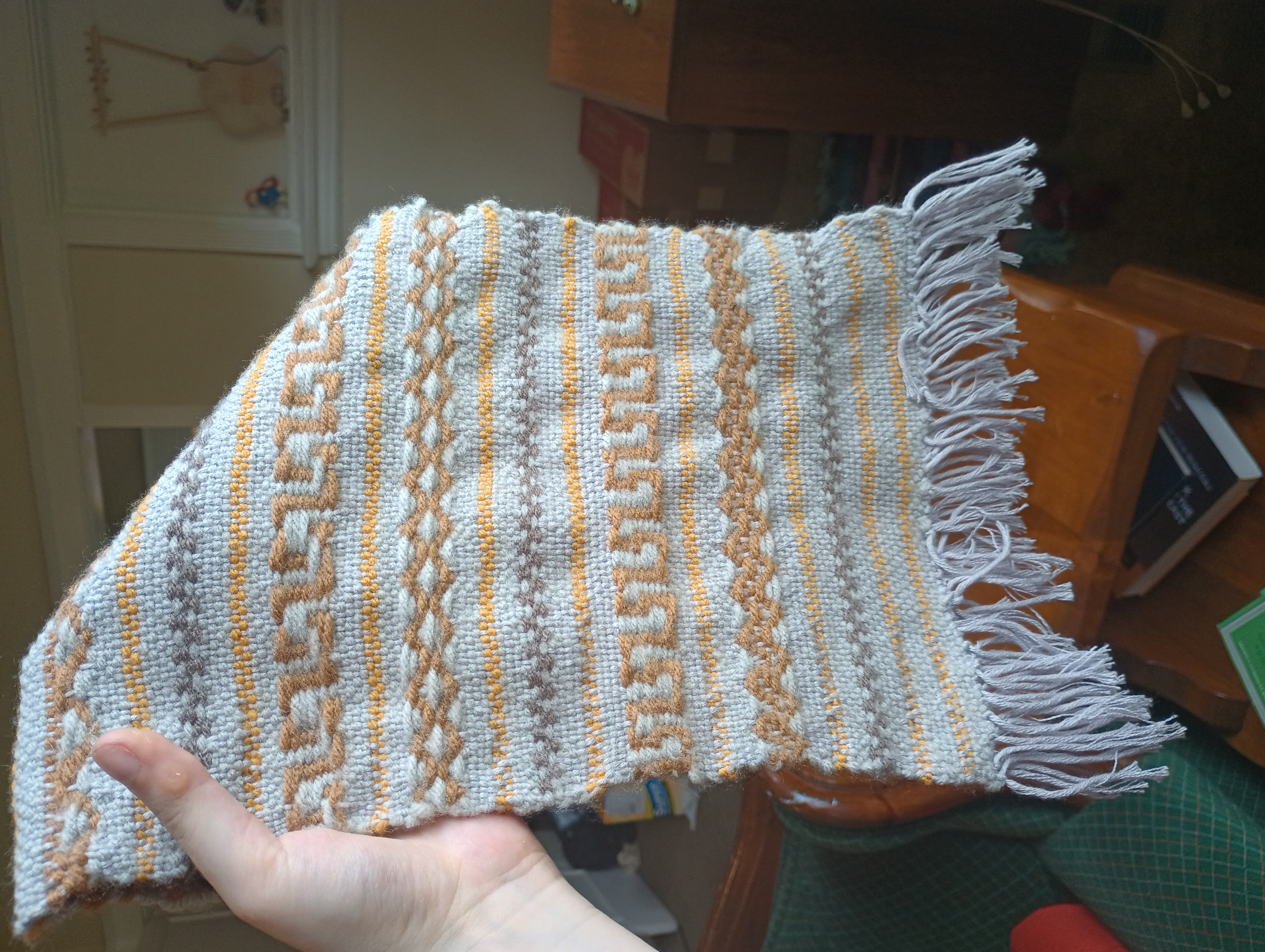
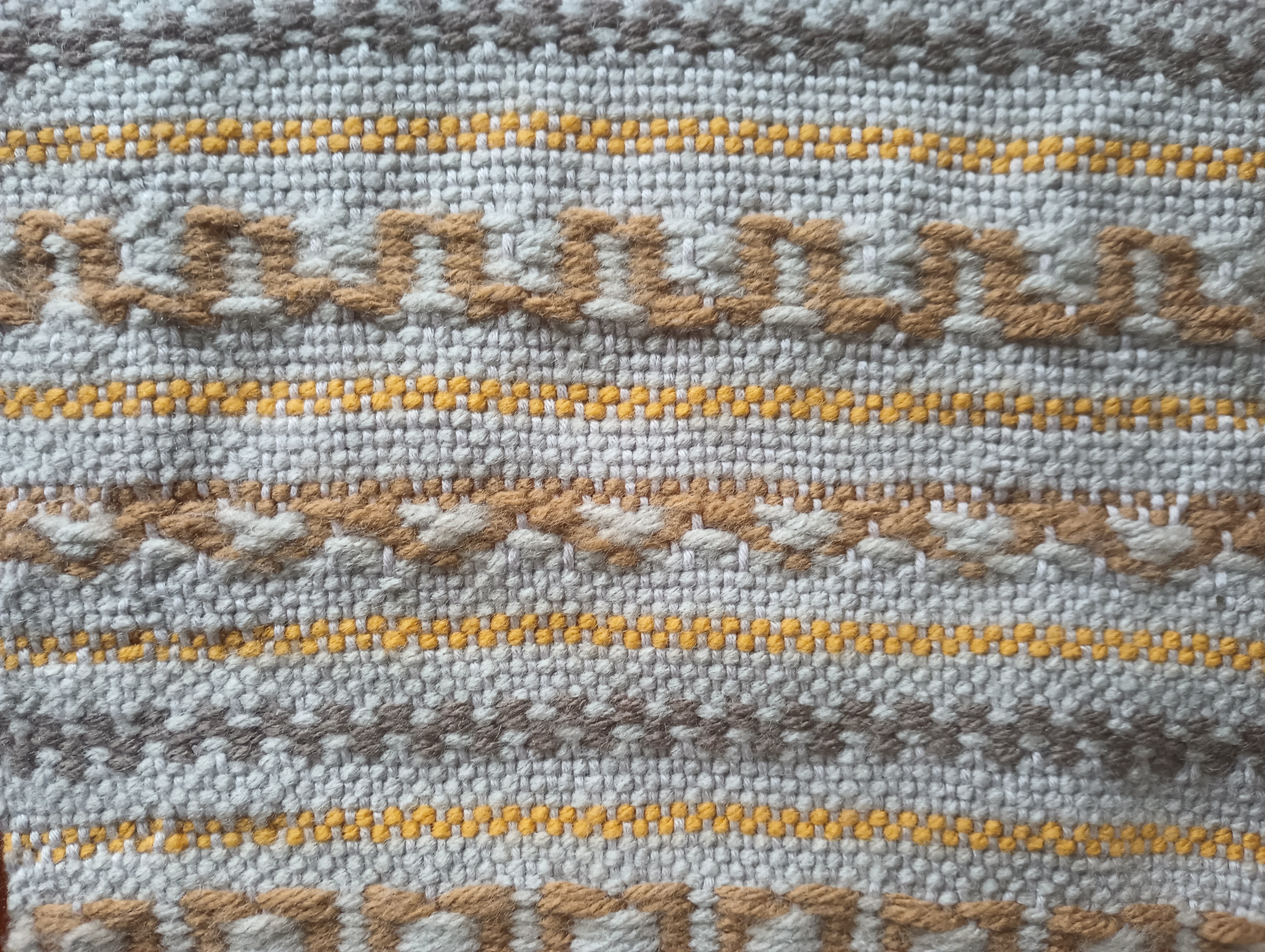
"We draw inspiration from the world around us, and as geometric patterns were so common in the Greek world, I believe it is within reason to assume that textiles could display those same patterns, especially if those ceramics were in the domestic setting where they could be seen regularly."
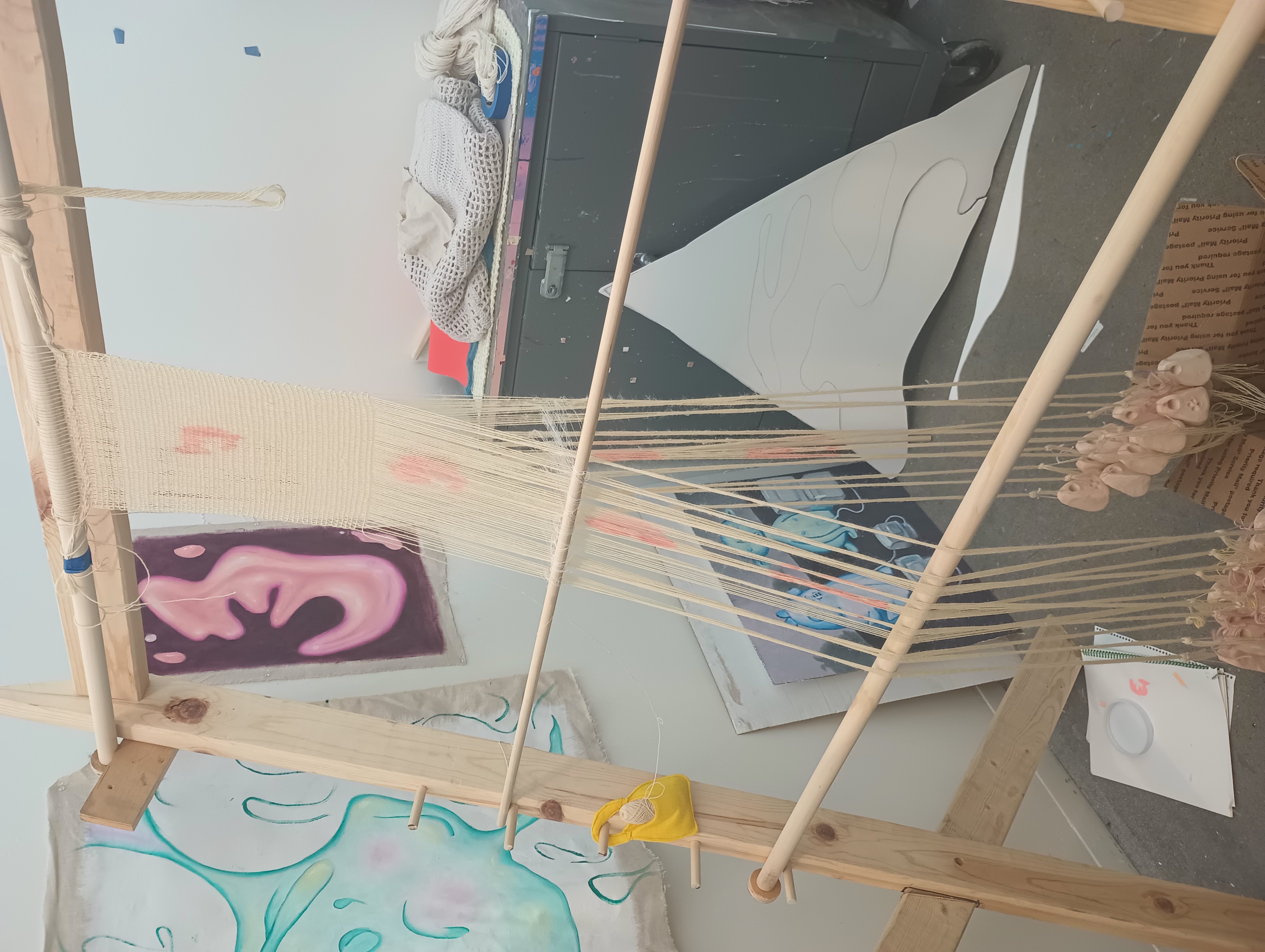
"The specific technique I used for my project is called warp-painting... What drew me to this process initially was the unique way that the painted image is abstracted when the weft is woven in, yet there is still vast potential for representing recognizable images."
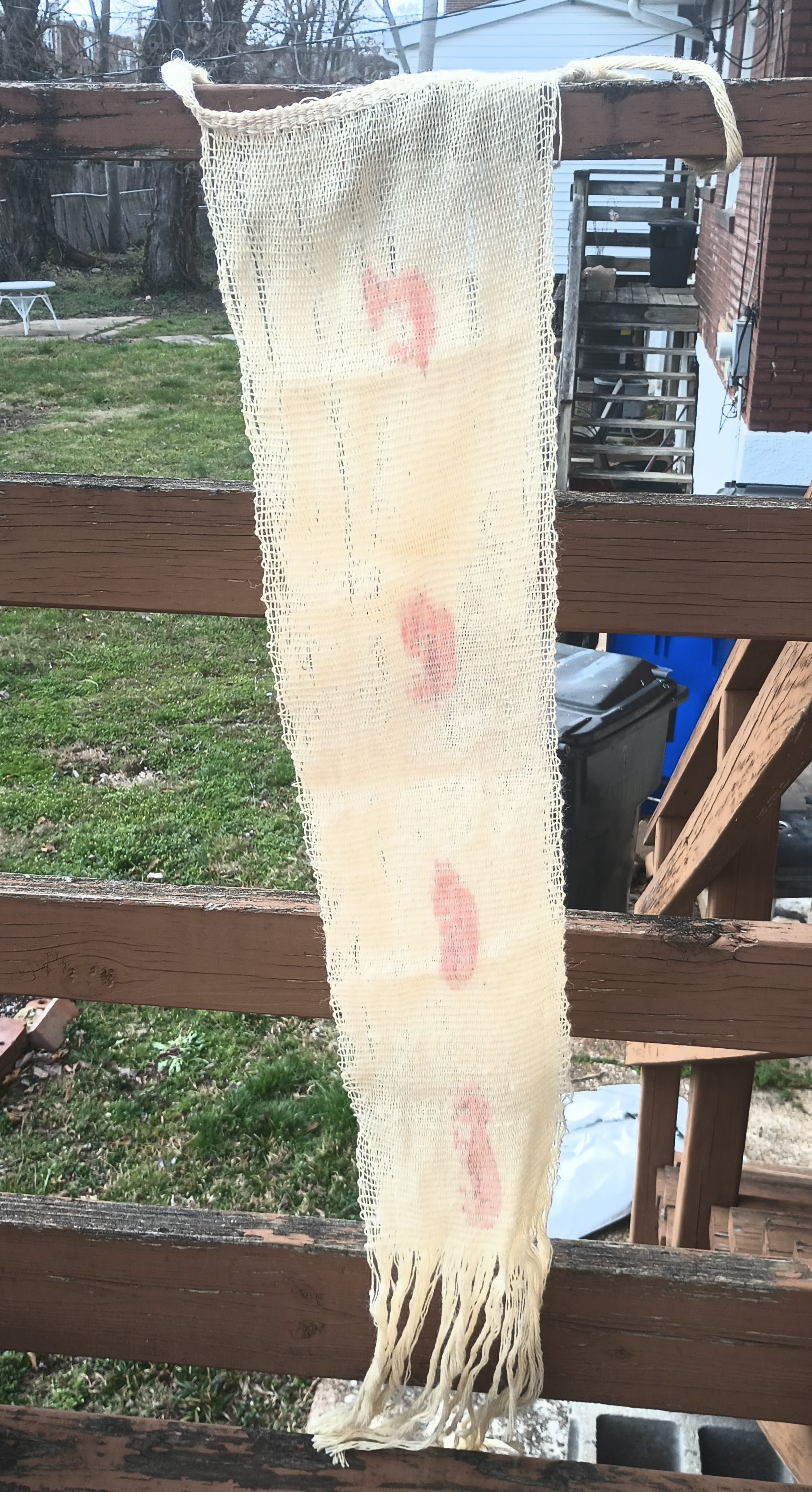
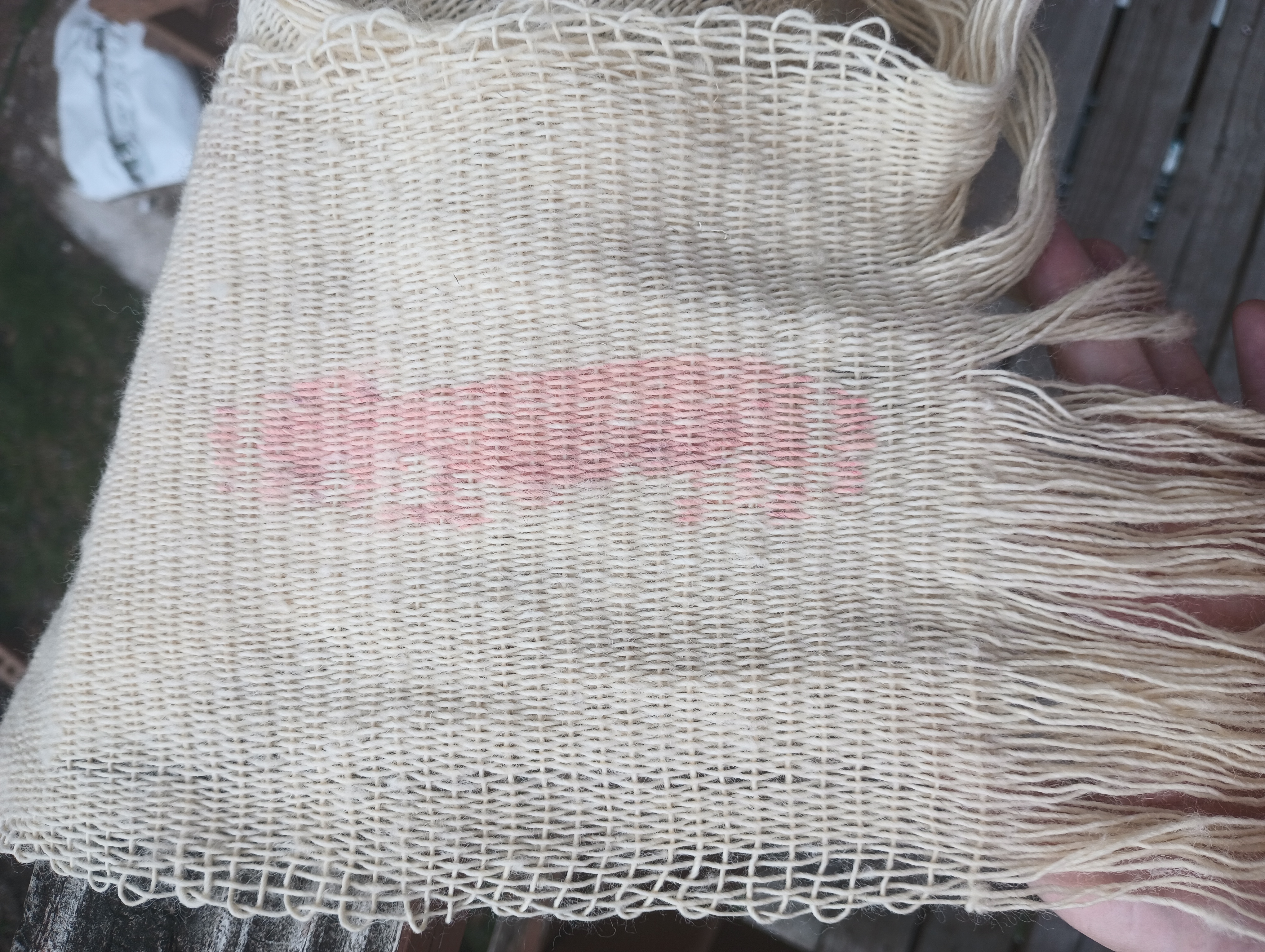
"I wove in the weft using a simple warp-facing tabby weave, and I ended up doing a semi-open weave so that my painted design would be more visible in the final product. I created multiple iterations, experimenting with string thickness and methods of applying paint.
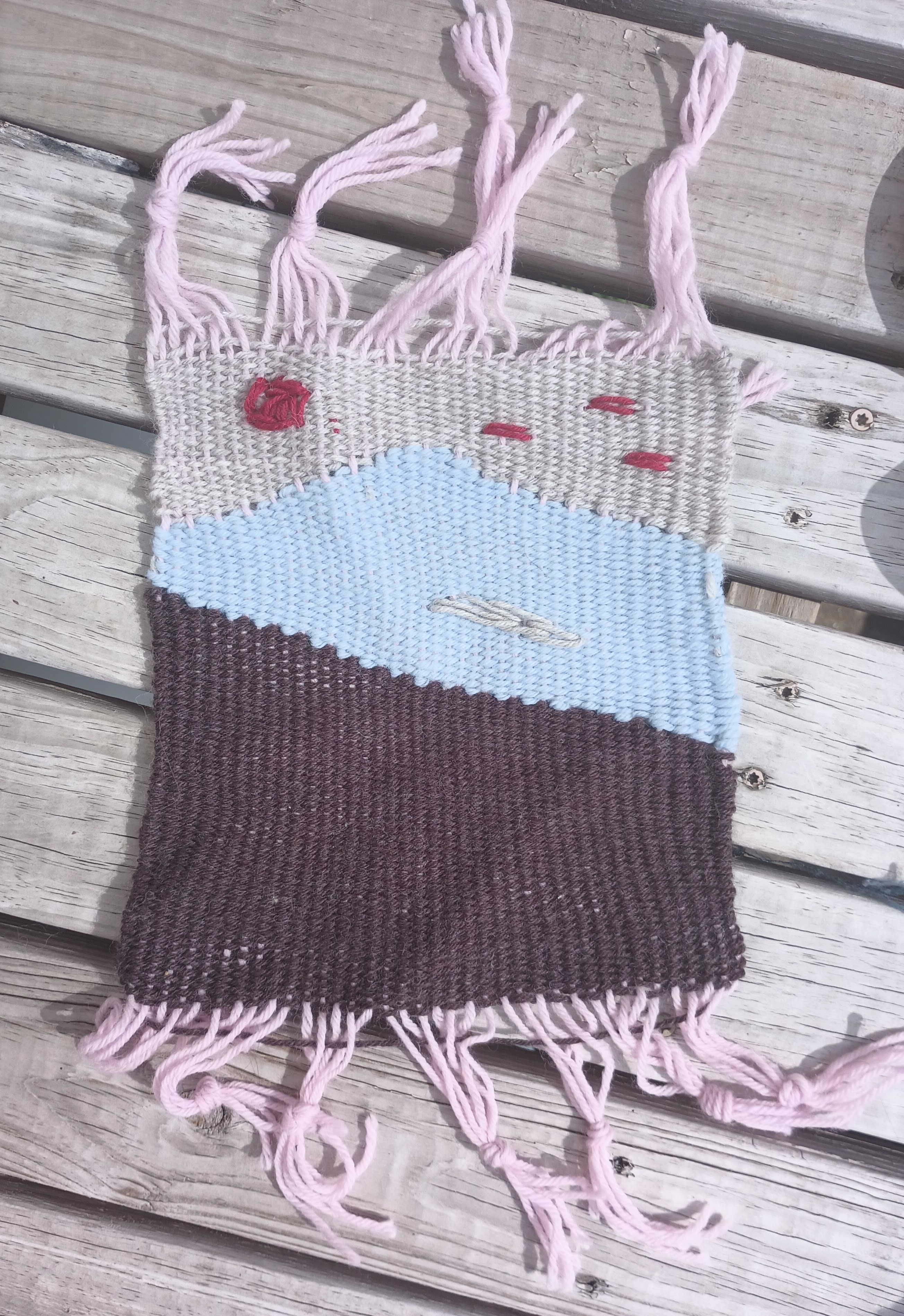
"The process reinforced the point that emerged from my research: tapestry, while requiring careful pre-planning of the image and color areas, is relatively straightforward to weave once the design is established."
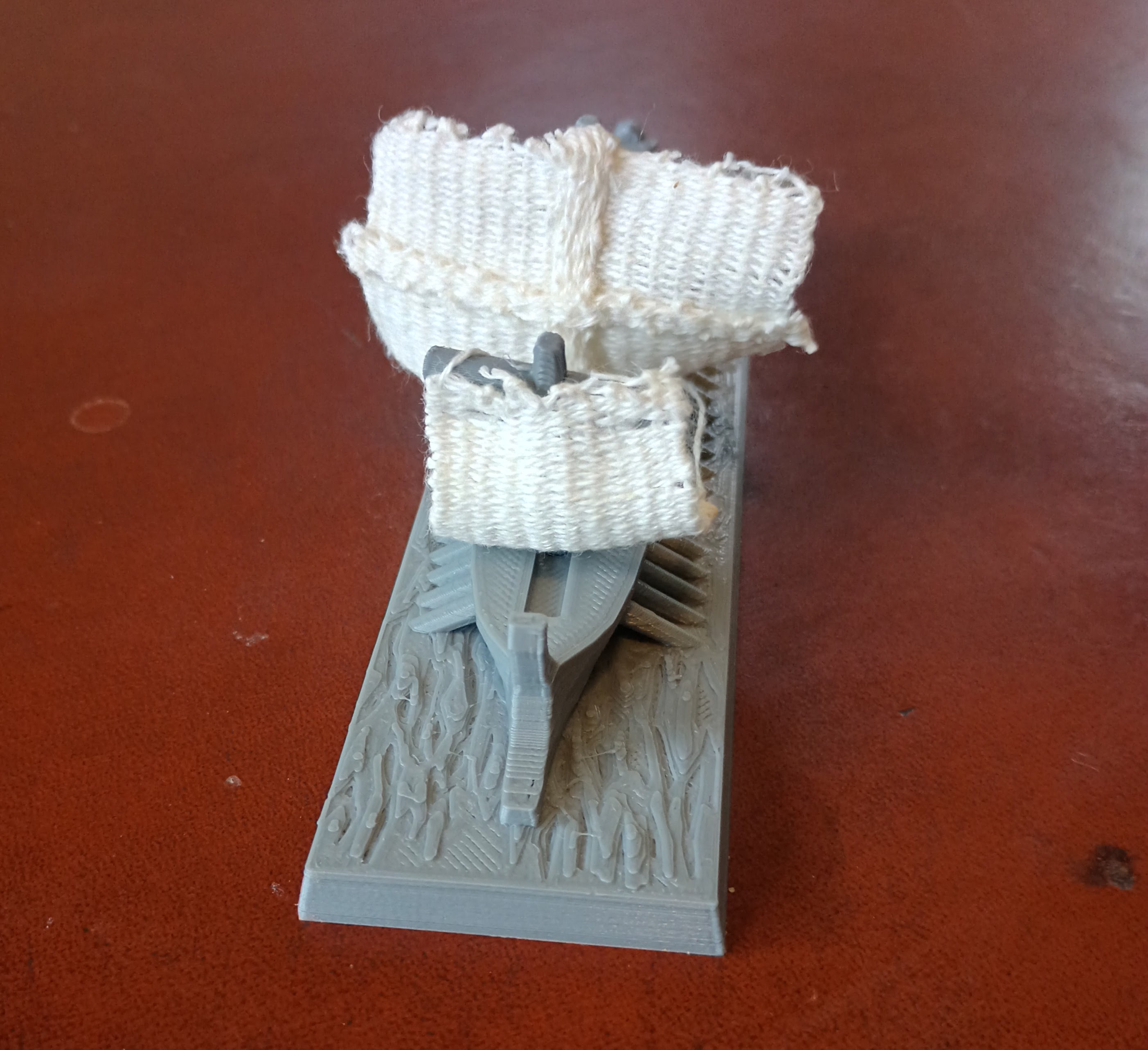
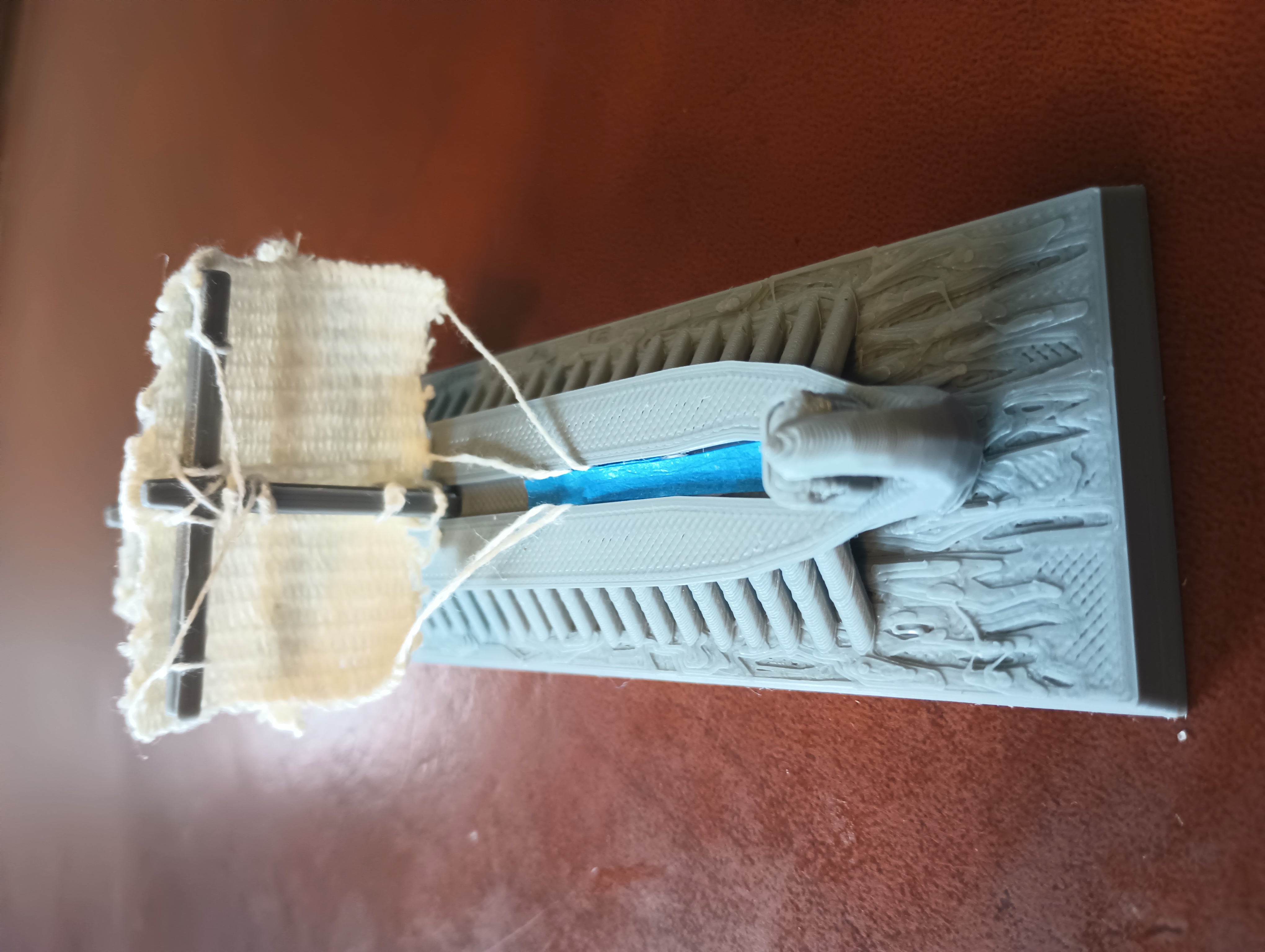
"For my recreation, I tabby wove the two sails out of plain white linen thread, as linen was the main material used to produce sails in ancient Greece."
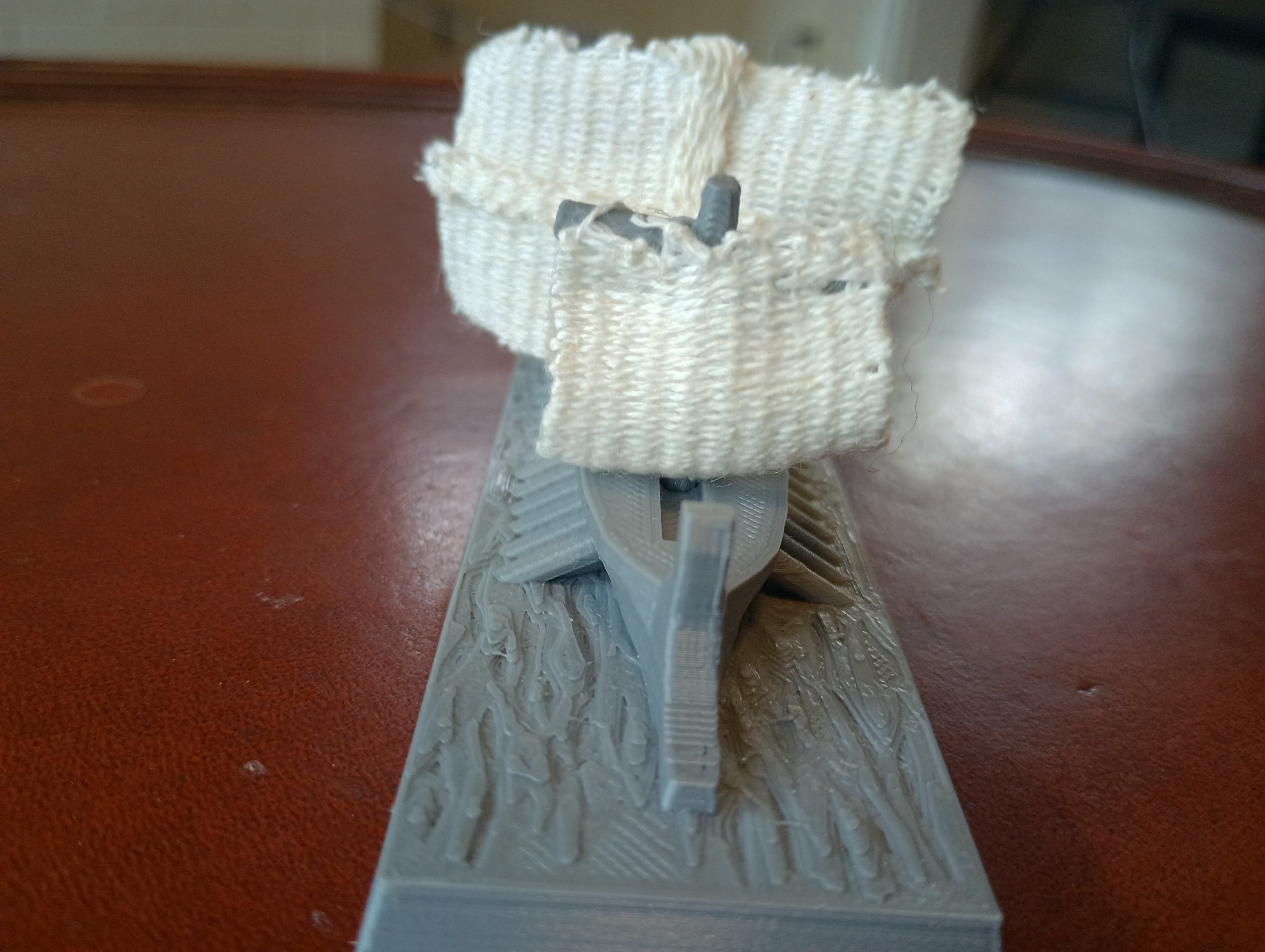
"For my replication, two small woven sections were sewn together for the mainsail, although the foresail was woven in just one section due to its already small nature. In addition to sails woven in smaller segments, reinforcements are woven and sewn into the sail.
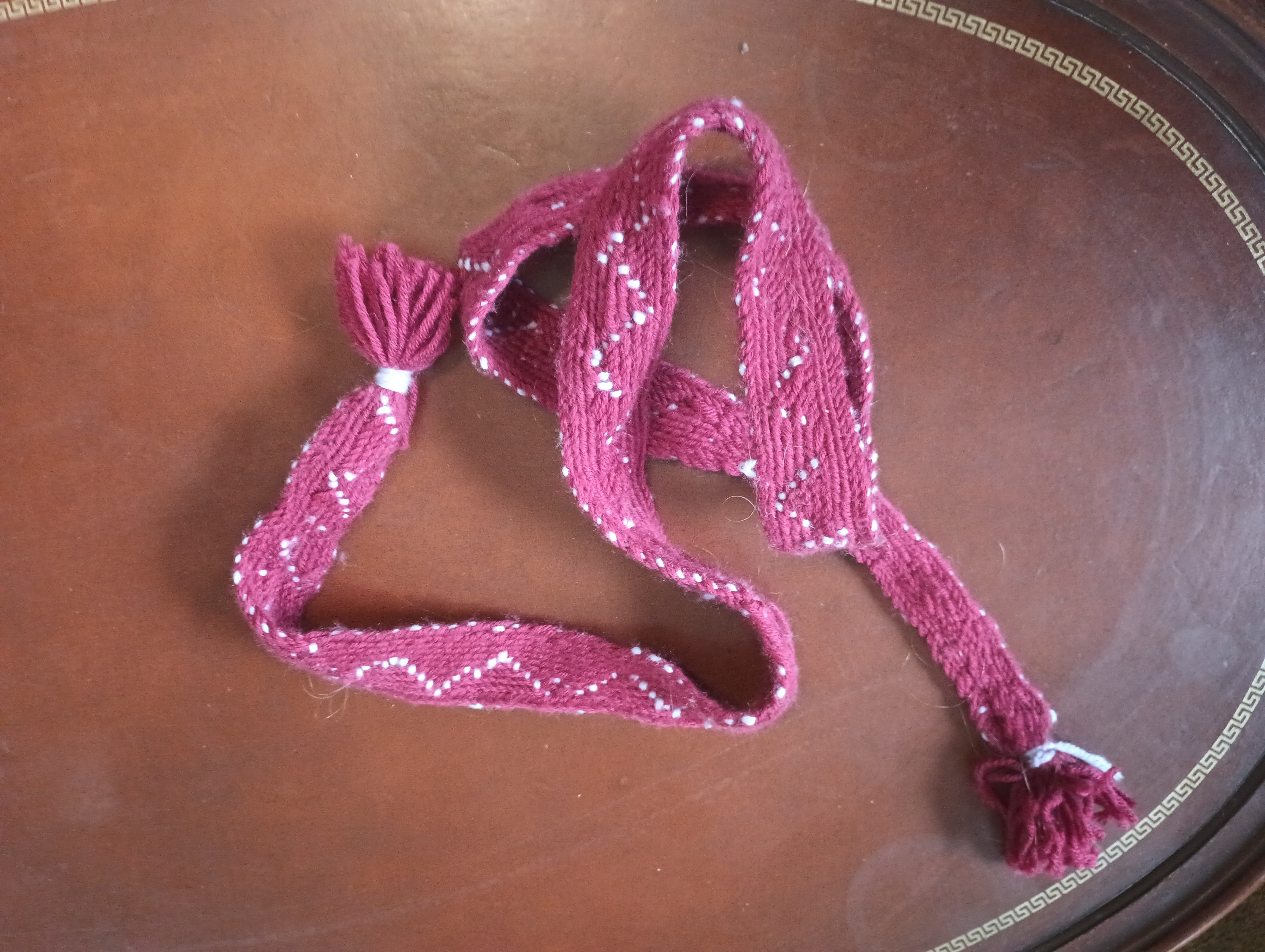
"While difficult for a beginner to weave, mantles edged with contrasting tablet woven borders appear often in Etruscan art, suggesting their popularity among people wealthy enough to commission these artworks."